





Understanding Fiber Laser Engravers: Your Ultimate Guide

Fiber laser engravers stand out due to their remarkable precision and power when working with specific materials, particularly metals and plastics.
Their technological prowess has made them a go-to tool for professionals in various industries.
In this guide, we will explore the principles behind fiber lasers, their advantages, and their key applications, helping you make an informed decision for your engraving needs.
What Exactly is a Fiber Laser Engraver
A fiber laser engraver is a high-tech marking system that utilizes an active optical fiber.
This fiber, often doped with rare-earth elements such as ytterbium, serves as the core of the system.
Understanding this technology is essential, as it reveals how the laser works: diodes pump light into the fiber, which amplifies it to generate a powerful laser beam.
This beam is precisely guided and focused onto the material by a scan head, creating permanent, high-quality marks with incredible precision.
The result is a fast, durable, and highly accurate engraving.

Unleashing Potential: Materials a Fiber Laser Can Engrave
Fiber lasers excel in engraving metals, including stainless steel, aluminum, titanium, gold, silver, brass, and copper.
They produce deep, crisp, and high-contrast marks that are permanent, offering exceptional durability and resistance to wear, chemicals, and extreme temperatures.
Additionally, fiber lasers are effective on certain plastics, composites, and coated materials, making them versatile for various industries.
From serial numbers on plastic parts to intricate designs on painted surfaces, their capability is unmatched.
Fiber vs. The Rest: CO2, Diode, and Beyond
When considering the right laser for your needs, it's important to understand the distinctions:
Fiber Lasers: Precision for Hard Materials
Fiber lasers are unrivaled in precision and speed, particularly for metal marking.
Their low maintenance and exceptional beam quality make them ideal for industrial applications requiring fine details and durability.
CO2 Lasers: Versatility for Organic Materials
CO2 lasers are perfect for organic materials like wood, acrylic, leather, and glass.
While they don't perform well on bare metals, they are highly effective for intricate cutting and engraving on softer materials.
Diode Lasers: Accessible All-Rounders
Diode lasers are versatile and accessible, making them popular among hobbyists and small businesses.
They can engrave a wide range of materials such as wood, acrylic, leather, and certain treated metals.
They are an excellent option for those who don’t need industrial-grade performance but seek reliable results for various applications.
Best Fiber Laser Engraver Alternative for Beginners – Creality Falcon A1 Pro
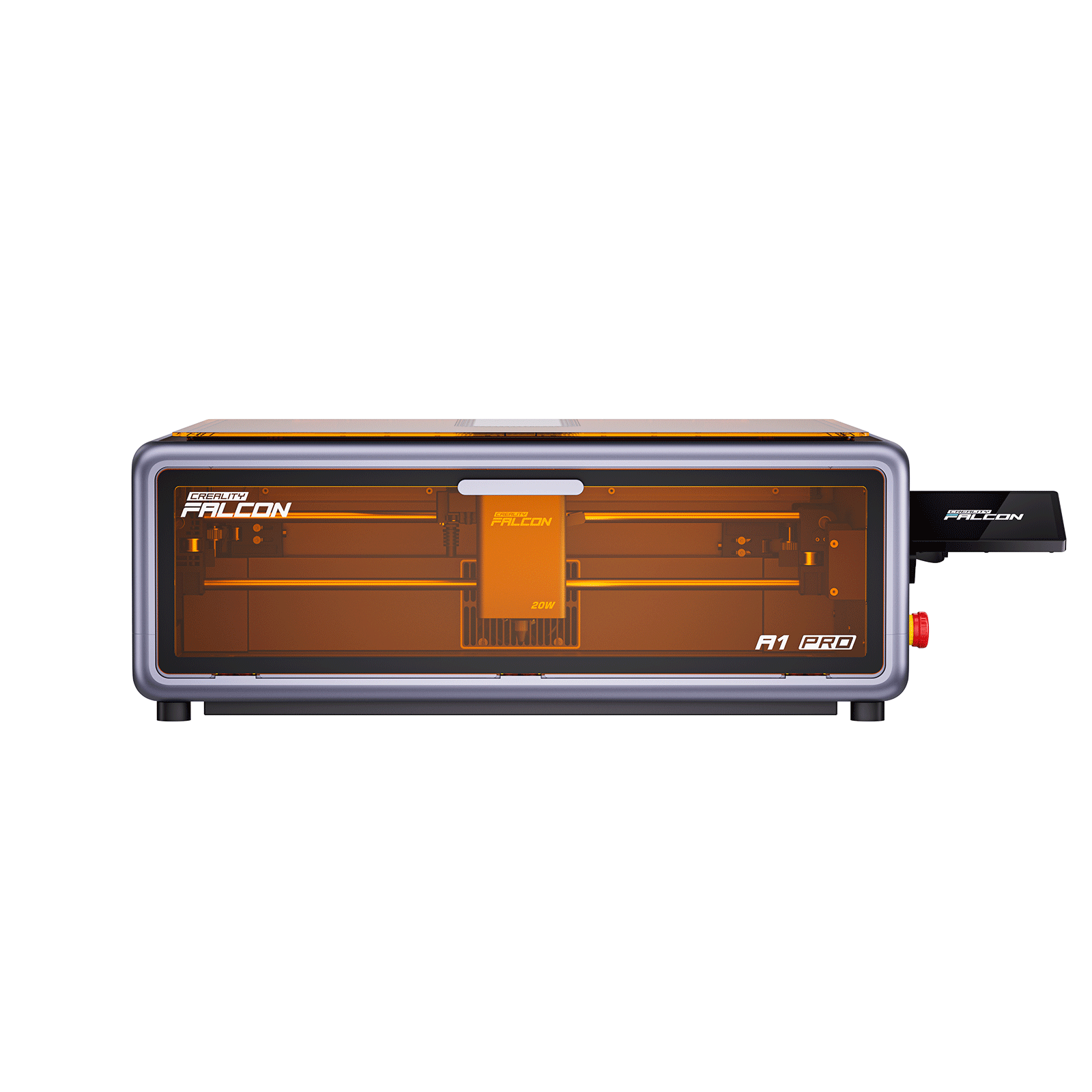
For beginners looking to dive into the world of laser engraving, the Creality Falcon A1 Pro 20W is an ideal choice, offering many advantages over traditional fiber lasers—especially when it comes to ease of use, cost-effectiveness, and material versatility.

Why Choose the Falcon A1 Pro Over a Fiber Laser
-
Affordability & Accessibility: Fiber lasers are typically more expensive and require a higher initial investment, along with more complex maintenance. The Falcon A1 Pro, with its 20W diode laser, provides an affordable entry point for beginners, without compromising on quality or precision. You get powerful engraving and cutting capabilities at a fraction of the cost of fiber lasers.
-
Ease of Use: The Falcon A1 Pro is designed with beginners in mind. Its user-friendly features, such as auto-focus, integrated camera, and easy setup, make it simple to get started right out of the box. Fiber lasers, on the other hand, are often more complex to operate, with manual adjustments and fine-tuning required, which can be intimidating for newcomers.
-
Material Flexibility: Fiber lasers are excellent for marking metals and harder materials, but their use on non-metals like wood, acrylic, or leather is limited. The Falcon A1 Pro is a versatile diode laser engraver that works effortlessly with a wide range of materials, including wood, leather, acrylic, fabric, and more. For beginners, this broad material compatibility allows more room for experimentation and creativity without being confined to a narrow set of materials.
-
Compact & Safe Design: The fully enclosed design of the Falcon A1 Pro ensures that safety is prioritized, which is essential for beginners who are still familiarizing themselves with laser engraving. Its compact footprint makes it perfect for small workshops or even home use. Fiber lasers often require larger spaces and more complex setups, making them less suitable for those starting in the craft.
Key Features of the Falcon A1 Pro:
-
20W diode laser: Powerful enough for detailed engraving and cutting on a wide variety of materials.
-
Dual laser system option: Adding an infrared (IR) laser module allows engraving on metals, giving beginners a chance to explore even more possibilities.
-
Automatic focus & high-res camera: Simplifies setup and material alignment for precise results.
-
User-friendly interface & software compatibility: Works with popular software like LightBurn, ideal for new users.
Why the Creality Falcon A1 Pro is Perfect for Beginners
For anyone starting out in the world of laser engraving, the Creality Falcon A1 Pro offers a perfect balance of affordable pricing, ease of use, and versatility—all the while providing fiber-like precision.
Whether you’re creating personalized gifts, crafting signs, or experimenting with various materials, this diode laser engraver is the best alternative for newcomers who want to avoid the complexity and cost associated with fiber lasers.
In conclusion, the Creality Falcon A1 Pro is the perfect beginner-friendly choice, allowing you to grow into laser engraving without the steep learning curve and high upfront costs of a fiber laser.
Key Applications & Industries for Fiber Lasers
Fiber laser engravers are used across multiple sectors, from industrial applications to consumer-facing products.
In industrial environments, they are commonly used for part marking, traceability, and critical applications like medical device engraving and aerospace component identification.
For consumer products, fiber lasers are often employed in creating personalized jewelry, engraving metal gifts, and adding crisp logos to electronics.

Additionally, they play a vital role in anti-counterfeiting measures, ensuring unique identifiers that cannot be replicated.
Choosing Your Fiber Laser: Essential Factors to Consider
When selecting a fiber laser engraver, there are several factors to consider to ensure it meets your specific needs:
- Power (Wattage): Higher wattage translates to faster engraving and deeper marks, especially on harder materials.
- Beam Quality & Scan Head: These elements are critical for precision. A superior beam ensures sharp details, while a high-quality scan head delivers accuracy and speed.
- Workspace Size: Match the machine’s workspace to your project size, whether small parts or larger components.
- Software Compatibility: Ease of use is key. Look for versatile software with robust features that fit your workflow.
- Budget & ROI: Fiber lasers are a significant investment. Assess your budget and potential ROI based on how the machine enhances your operations.
Maximizing Your Investment: Tips for Operation & Maintenance
To get the most out of your fiber laser engraver, consider the following best practices:
- Safety: Always wear appropriate safety eyewear, ensure good ventilation, and use an enclosed system if possible.
- Optimal Settings: Perform material testing to fine-tune power, speed, and frequency for optimal results without damaging your workpiece.
- Routine Maintenance: Regularly clean lenses, check connections, and maintain a clean environment around the machine.
- Software Best Practices: Optimize designs and prepare files carefully to maximize output efficiency.
The Future of Precision: Innovations in Fiber Laser Technology
The fiber laser technology landscape is evolving rapidly.
Innovations like MOPA technology, which allows adjustable pulse durations, open new possibilities such as color marking on certain metals.
Additionally, ultra-fast lasers are emerging, ideal for delicate materials that require minimal heat transfer.
As automation and AI-driven systems integrate with fiber lasers, we can expect even greater precision and efficiency in the future.
Recent News

LightBurn Test File Download Guide
This LightBurn test file guide covers why to run material tests, where to download reliable files, how to...

Best 9 40W Laser Engravers: Diode vs CO2 vs Fiber
Discover the 9 best 40W laser engravers, comparing diode vs CO2 vs Fiber models. Find the right 40W...

The 4 Best Desktop Laser Cutters for Indoor Use
Discover the top 4 desktop laser cutters for indoor use. Compare enclosed designs, ventilation features, and compact sizes...


